
Understanding Interior Ceiling Board
I plus one supplies interior ceiling board in Kannur and accepts enquiries for related installation services. This guide covers choosing a ceiling board around the room layout. Whether you are buying materials for your own contractor or discussing supply with installation, a clear specification is the best starting point. Share your project requirements with our team at Chalad so the material choice, quantities and work involved can be discussed together.
Interior ceiling board is a category rather than one universal product. The right choice depends on the room, finish and ceiling arrangement. Explain whether you want a smooth continuous surface, a modular appearance or a replacement for an existing board before comparing materials.
Where it fits in your project
A living room, office or shop may have different lighting, access and visual requirements. Ceiling height and the position of fixtures should be considered early. A simple sketch showing the proposed ceiling shape can clarify the enquiry better than floor area alone.
Choosing the specification
Confirm the board material and grade for the intended conditions. Supporting framework, joints and finishing products should be selected as part of the same arrangement. Do not assume that boards with similar dimensions can be swapped without considering their installation requirements.
For board work, consider the finished surface and the construction behind it together. Tell the installer about planned shelves, fittings, access points and changes in level. These details are easier to coordinate before a material list is finalised. If the project involves several rooms, label the requirements room by room rather than combining every sheet into one undifferentiated total. That makes delivery checking more straightforward and helps keep any product-specific requirements attached to the area where the boards will be used.
Planning supply and installation
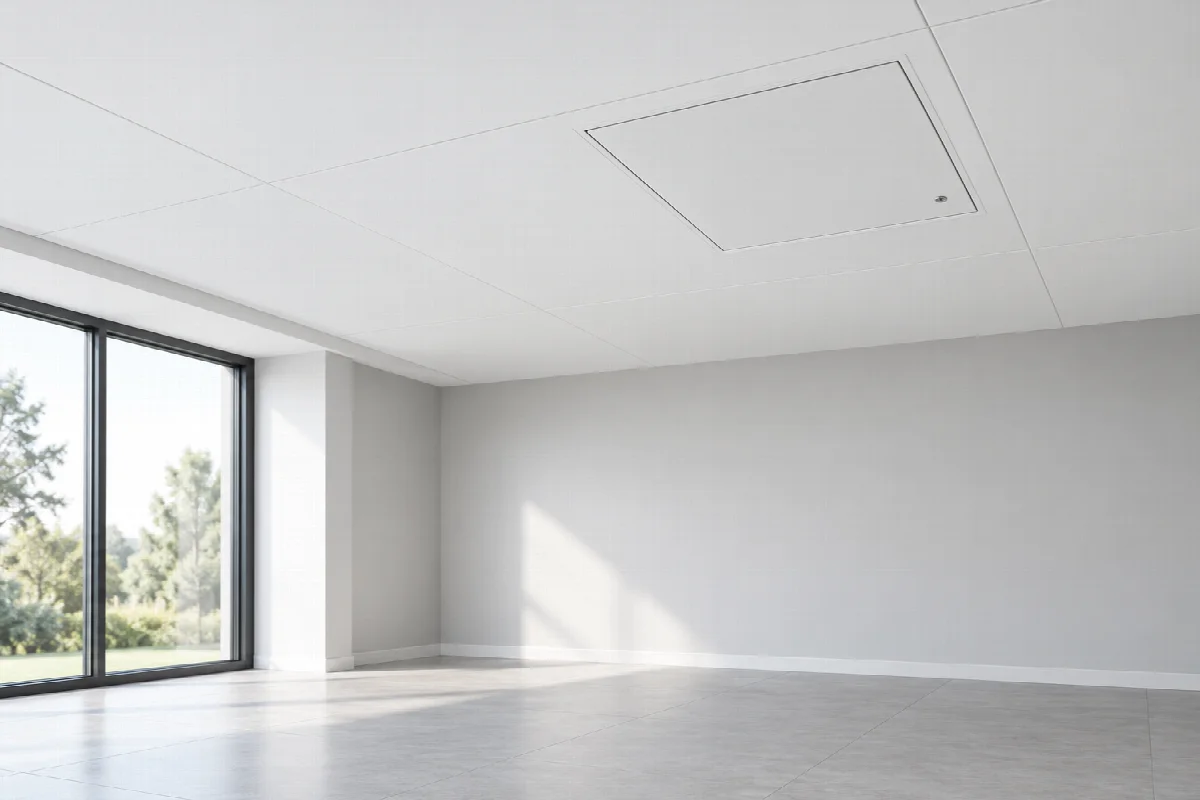
Agree the ceiling level and coordinate openings before the board layout is finalised. The scope should identify who provides framing, boarding, joint finishing and decoration. Planned access points are easier to include before the ceiling is closed than to add after the finish is complete.
Before requesting an estimate, prepare room measurements, photographs and any drawings or product references you already have. Identify areas where the scope is uncertain rather than treating an early estimate as a final material schedule. Tell us whether work will happen in an occupied space and whether delivery or access needs special coordination. These practical details help separate the material requirement from site preparation, installation and the other activities needed to complete the job.
Ordering from I plus one in Kannur
An itemised quotation makes comparison easier. Check the named material, quantities, accessories and agreed work instead of comparing only a headline price. Ask which parts of the job are included and which will be handled by another contractor. Availability, pack sizes, delivery arrangements and scheduling should be confirmed for the actual order. If the design changes after the quotation, review the material list again so that the purchase continues to match the revised project.
When comparing two proposed options, ask for the product references in writing and check the same scope against each. A lower material price may describe a different quantity, finish or accessory list. Resolving that difference before purchase is more useful than discovering it when installation is under way.
At delivery, check the labels and quantities against the agreed list and raise visible damage or discrepancies before the materials are used. Keep invoices and product information together. Those records provide a practical reference if more material is needed later or a future repair requires a matching item.
For phased work, separate the immediate requirement from later stages. Confirm a suitable storage area and discuss how materials will reach the work location. This helps the purchase follow the planned sequence and avoids treating a provisional whole-project estimate as an instruction to deliver everything at once.
Care, repairs and future changes
Keep the board and finish references for future repairs. Staining or repeated cracking should be investigated rather than concealed. Before adding a fixture or changing an opening, identify the existing ceiling assembly and obtain the appropriate fixing or alteration detail.
Discuss your requirements
Visit I plus one at Chalad, Ambala Road, Near Ambala Maithanam, Kannur, or call 9846878687. Bring a drawing, sample or photographs if you have them. State whether you need material supply only or related installation services, and mention any existing work that must be matched. A clear enquiry helps us discuss the next step and prepare a quotation around your project rather than an assumed standard package.